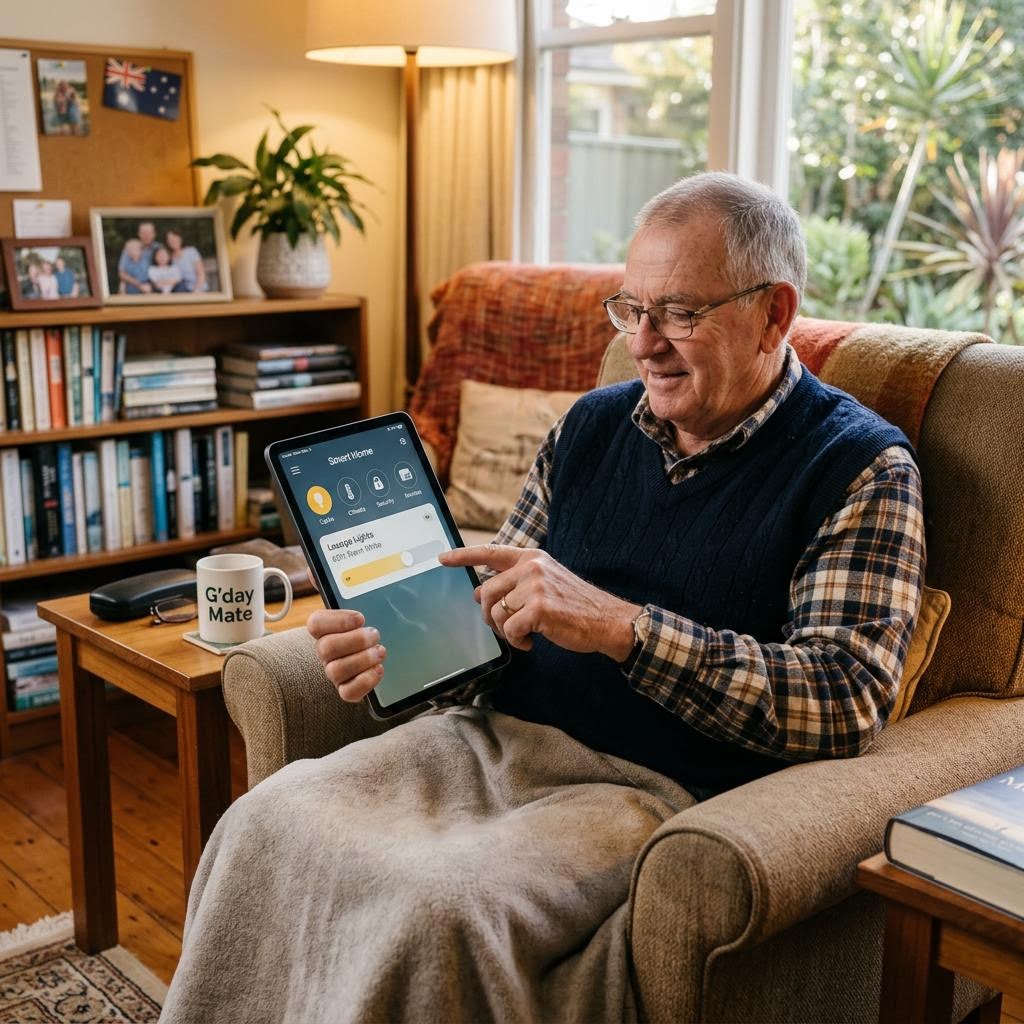
The deeply held desire to remain living independently in one's own home for as long as humanly possible is universal among older Australians. With the robust integration of assistive technology funding directly into the Support at Home program, the Australian Government is actively financing intelligent solutions that make this goal achievable and safe for more people than ever before.
Moving Beyond Walking Frames
While traditional mechanical aids like customized walking frames, stair lifts, and reinforced shower chairs remain absolutely vital components of home safety, the formal definition of assistive technology has broadened significantly. The Support at Home program now explicitly recognizes the tremendous preventative value of "smart" digital technology in maintaining safety, preventing falls, and supporting cognitive independence.
Key Technologies Making a Tangible Difference
- Personal Emergency Response Systems (PERS): Modern PERS devices have evolved far beyond the simple, manual pendant alarms of the past. They now routinely include highly sensitive automatic fall detection algorithms, GPS tracking geofencing for individuals prone to wandering due to dementia, and direct two-way cellular communication with 24/7 monitoring centers.
- Automated Medication Management: Complex medication regimes are a major cause of hospital admissions. Smart medication dispensers not only securely organize pills by time and day but provide escalating visual and auditory reminders. If a critical dose is missed, the system can automatically send SMS alerts to family members or a designated care provider for immediate intervention.
- Passive Environmental Monitoring: Non-intrusive smart home sensors can continuously monitor a resident's daily activity patterns without relying on cameras. If a routine changes drastically—such as the refrigerator not being opened all day, or the resident spending unusually long, stationary periods in the bathroom indicating a potential fall—the system will silently alert a nominated emergency contact.
Accessing Technology Through Your Government Package
To have sophisticated assistive technology funded through your Support at Home budget, it cannot simply be purchased arbitrarily. It must be formally identified as a necessary, preventative support during your official assessment and explicitly included in your final Support Plan. Working collaboratively with an occupational therapist is crucial; they can conduct an in-home assessment to ensure that the selected technology is precisely appropriate for your specific physical layout and cognitive capabilities, ensuring the funding is spent effectively.
References
- Assistive Technology Australia (2026). Technology in aged care.
- Department of Health and Aged Care (2025). Support at Home technology guidelines.
- Australian Institute of Health and Welfare (2025). Ageing and technology adoption.